The Best Supplement Stack Under $100 a Month
If you want to get serious about lifting but only have $100 a month to put toward supplements, you're in a better position than you think. You don't need ten different products, you need three, chosen well.
Here's the complete stack: creatine, protein powder, and a pre-workout, all built around what's actually been proven in peer-reviewed research to do three things:
drive strength improvements,
help you add lean muscle,
and help you recover faster so you can train harder and more often.
~$10 Creatine | ~$40 Protein Powder | ~$40 Pre-Workout (optional) |
Creatine: ~$10/Month
Creatine is one of the most heavily researched supplements on the market, and also one of the cheapest. Whether you go premium or grab a basic creatine monohydrate tub, any quality creatine monohydrate is a great foundation for a beginner stack.
A typical dose is around 10 grams a day, which puts most options in the $6–$12/month range — call it $10 on average. If you were only going to take one supplement out of this entire list, this is it.
Protein Powder: $40 (Budget) to $90+ (Premium)
Food should always come first, but hitting your daily protein target through food alone gets harder the bigger you are and the more you train. That's where protein powder earns its spot — fast, convenient, and effective for muscle building and recovery.
There's a real range here. On the budget end, a 30-serving tub (about a scoop a day for a month) runs $30–$40. On the premium end — cleaner ingredients, fewer fillers, brands like Transparent Labs — you're looking at $50 up to $80–$90 depending on the brand.
Cheaper protein powders tend to carry more added sugar or artificial sweeteners and fewer of the cleaner-ingredient priorities premium brands focus on. That's a real trade-off, not a dealbreaker — but it's worth knowing what you're giving up at the lower price point. Personally, I'll spend a bit more here because it's something I use daily, and I want to know exactly what's in it.
Label-Reading Tip
A good protein powder delivers roughly 20–25 grams of protein per serving at around 120–150 calories. If you're seeing something like 20 grams of protein packed into 200+ calories, you're likely getting a lot of extra carbs and fat you don't need. Read the label before you buy.
For this $100 budget, we'll go with the budget option here: $40/month.
Pre-Workout: ~$40/Month (Optional)
Pre-workout is the one piece of this stack that isn't essential. If $100 is still more than your budget allows, this is where you cut first — you can absolutely train hard and make progress without it.
That said, it's a useful tool for focus and consistency, especially on days you're dragging. If you do add one, look for two must-haves: 6–8 grams of citrulline per serving, and caffeine — typically 150–350mg per serving, with 150–200mg being a reasonable starting point if you're unsure how you respond. If caffeine affects your sleep or you already get plenty from coffee, non-stimulant versions exist that deliver everything else without it.
I personally use Transparent Labs pre-workout — their regular and Black formulas — reserved for my harder, heavier training days. At 30 servings and training 4–5 days a week, that lands around $40/month. Watch out for pre-workouts loaded with proprietary blends and added sugars where you don't actually know what you're getting — that's often just a markup on ingredients that may or may not be doing anything.
Save 10% at Transparent Labs
Use code DEWAR on creatine, protein, or pre-workout.
The Full $100 Stack, Recapped
Supplement | Cost | What It Does |
|---|---|---|
Creatine | ~$10/mo | Strength and performance output |
Protein powder | ~$40/mo | Hitting your protein target — whey, vegan, and casein all work |
Pre-workout | ~$40/mo | Optional, but useful for focus and consistency |
Total | ~$90/mo | Before tax or shipping |
That's roughly $90/month before tax or shipping, all backed by supplements that have actually been shown to work — not trendy extras you're paying for on faith.
Honorable Mentions (If You Have a Little Extra)
If you've got a few dollars of wiggle room some months, a few situational additions are worth knowing about:
Carbohydrate powder (maltodextrin, dextrose, or whole-food-based options) — useful if you're training longer than 30–45 minutes or doing more endurance-style work. Replenishing carbs mid-session can help you push a bit harder in that same workout.
Electrolyte packets — look for potassium and sodium included, which support hydration and muscle contraction.
Recovery blends (ashwagandha, mushroom-based products, etc.) — nice to have, more expensive, and worth trying only once your core three are dialed in.
None of these are necessary. A banana covers carbs. Salt in your water covers electrolytes. Save the extras for when your budget genuinely has room.
Supplements Aren't Magic
None of this replaces training hard or following a program that's actually periodized — one that progresses your workouts, keeps you injury-free, and keeps you consistent. What supplements do is help you train harder and recover faster within that program, not substitute for one.
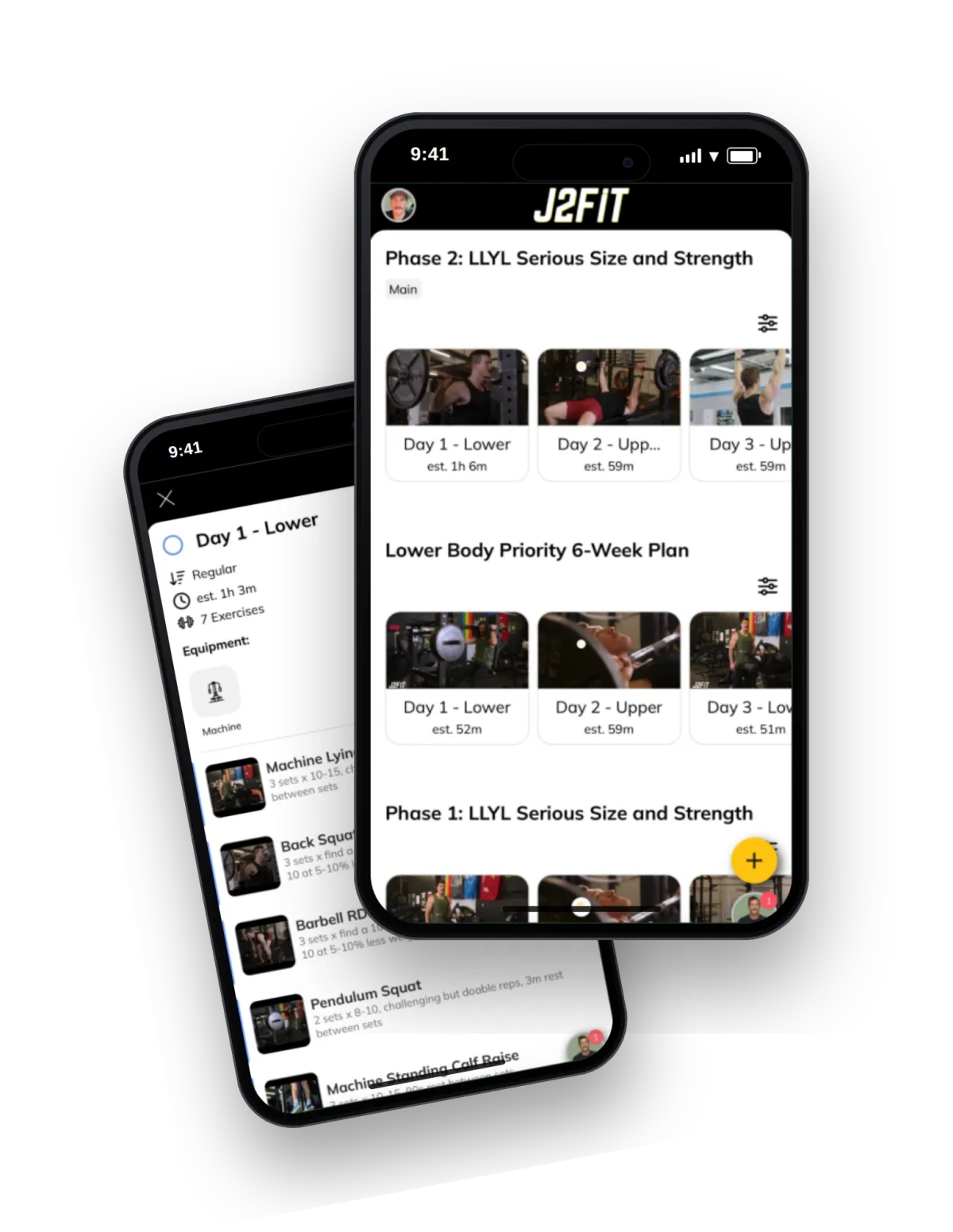
If you don't have a structured program driving your training, that's the actual gap to close first — check out the gym series workout plans or the full J2FIT workout app for programming built to make the most of the training this stack is supporting.
It's also worth knowing what you're actually eating and hitting for protein and calories day to day — supplements only help if the rest of your intake is dialed in. I use MacroFactor to track that; use code J2FIT14 for 2 free weeks.
The Stack Supports the Program.
Get the Program.
Structured, progressive training built to make every scoop count.
Get the AppTake the 60 Second Quiz
FAQ
Do I need creatine, protein, and pre-workout, or can I get by with less?
If you can only budget for one, make it creatine — it's the cheapest and most well-researched of the three. Protein powder is next if hitting your daily protein target through food alone is a struggle. Pre-workout is the most optional of the three.
Is a more expensive protein powder actually better?
Not necessarily for muscle growth — a cheaper protein powder with 20–25g of protein per serving builds muscle the same as a premium one. The difference is usually ingredient quality (added sugars, artificial sweeteners, fillers), not effectiveness for training.
How long does it take to notice a difference from creatine?
Most people notice strength and performance benefits within 2–4 weeks of consistent daily use. Creatine works cumulatively — skipping days here and there slows that down.
The Bottom Line
You don't need a cabinet full of supplements to make real progress — you need creatine, a solid protein source, and (optionally) a pre-workout that isn't loaded with filler. Under $100 a month, backed by real research, is genuinely enough. Everything else is a bonus, not a requirement.
— Mike