Inside a Masters Weightlifting Training Session (What Changes After 30)
At 39, I can't just walk in and start snatching the way I did in my 20s. When I get to the gym now, I already know warming up isn't a formality before the real workout. It is part of the workout. Here's what a full training day looks like for me right now, about 12–13 weeks out from a masters meet, and what's actually changed about how I train as I've gotten older.
Warming Up Isn't Optional Anymore
I'll start with a few minutes on the bike — nothing that gets me sweating, just enough to get blood moving and joints loosened. That little bit of circulation makes a real difference once the barbell's in my hands.
From there, it's mobility and activation on the floor: opening up the hips and back, then targeted knee work — isometrics and slow eccentrics on leg extensions have been a genuine gamechanger for me. Years ago, I ignored this kind of thing entirely, and I paid for it in aches that just wouldn't go away. Now that it's built in, my knees actually feel strong under a squat or a pull instead of just tolerable.
Once that's done, shoes go on, and something flips mentally — that's my cue that I'm ready to get under the bar.
Waking Up Speed Before Loading the Bar
Next comes bodyweight hops — simple, but they wake up the joints and remind my body to stay springy. Olympic lifting runs on speed and elasticity; you cannot be stiff and expect the bar to move fast.
Then it's empty barbell work, grooving the snatch pattern: speed under the bar, quick elbows, balance in the catch. Ten years ago, I would have rushed through this and called it boring. Now I treat it like the valuable work it actually is — if my bar path is clean and my timing feels sharp here, the heavy lifts fall into place a lot more easily later.
The Main Complex: Power Snatch + Snatch Balance
The main snatch work today is a power snatch into a snatch balance, and I like this pairing because it delivers both speed and stability in the same set.
The power snatch keeps me honest — I can't muscle it up. I have to be aggressive with the pull and fast under the bar, or the lift simply doesn't happen. It's a great gut check early in a session. The snatch balance builds pure overhead confidence — driving the bar down and catching it strong forces me to stay sharp in the bottom position. At this stage of my career, it's one of the best tools I have for keeping my shoulder stable and my bottom position solid without loading the pull too heavily.
The two movements feed off each other: the power snatch drives speed, the snatch balance reinforces finishing stable — together giving me everything I need for the full lift.
This is where the training mindset really shifts with age. I'll push these complexes heavy enough to be challenged, then back off for speed work. Years ago, I treated every set like a max attempt. Now, after a decade-plus of competitive weightlifting, I'm after crisp reps that build momentum week to week — that's what keeps me progressing while still being able to train again tomorrow. If I miss a rep but it was clean, I'll go after another. I don't force something that isn't there that day.
Clean & Jerk: Hang Clean Into Jerk
After snatches, it's clean and jerk work — today, a hang clean plus jerk complex. Starting from the hang shortens the pull, which demands precision. There's no room to drift or lose tension, which forces me to stay connected to the bar and really use my legs in the drive. Right into the jerk, the combo demands composure under fatigue as much as strength — the clean taxes the legs, and the jerk still needs a vertical drive and a strong lockout.
In my 20s, cleans were something I just ground out — chasing the heaviest number I could get even if the reps were ugly. Now I'm playing the long game: rhythm, posture, consistency. If every rep looks the same, I know I'm building a base that lasts. Same shift with the jerk — years ago I let my legs beat up my shoulders. Now I think of the jerk as pure leg drive: move vertically, stay aggressive, and the lockout takes care of itself. That mindset shift is a big part of what lets me keep progressing into my late 30s without wrecking my joints along the way.
Snatch Deadlifts, and Making Room for Fun
From the complexes, I move into snatch deadlifts — raw pulling strength work, but I don't treat it as a grind. The focus stays on posture and speed off the floor, keeping positions crisp, even while still training hard. And yes, there's flexing in between sets, too — we're serious about the training, but enjoying the process is part of what makes it sustainable enough to actually get strong over the long run.
Accessories: The Unglamorous Work That Keeps You in the Sport
Every session finishes with accessories — assisted Nordic curls to protect the hamstrings, strict pull-ups to keep the upper back solid. These are the small pieces that keep me healthy enough to train hard year after year, and honestly, they matter more the longer you stay in this sport.
What This Means If You're a Masters Lifter
None of this is fancy. Most of the complexes are built around my specific weaknesses and how they relate to the snatch and clean & jerk as competition lifts, layered with basic strength and accessory work to stay healthy and moving. What I've found later in my career is straightforward: the stronger I can get, and the more consistent work I put toward that over the long run, the more I'm able to maintain — or even build — my top end in this sport through my 30s and 40s.
If you're in your 30s, 40s, 50s, or beyond and curious about Olympic weightlifting as a masters lifter, this is a real snapshot of what to expect — though every program should look different depending on your specific weaknesses and goals. Masters lifters come into this sport with different limitations, different histories, different starting points, and training has to adjust to the athlete, not the other way around.
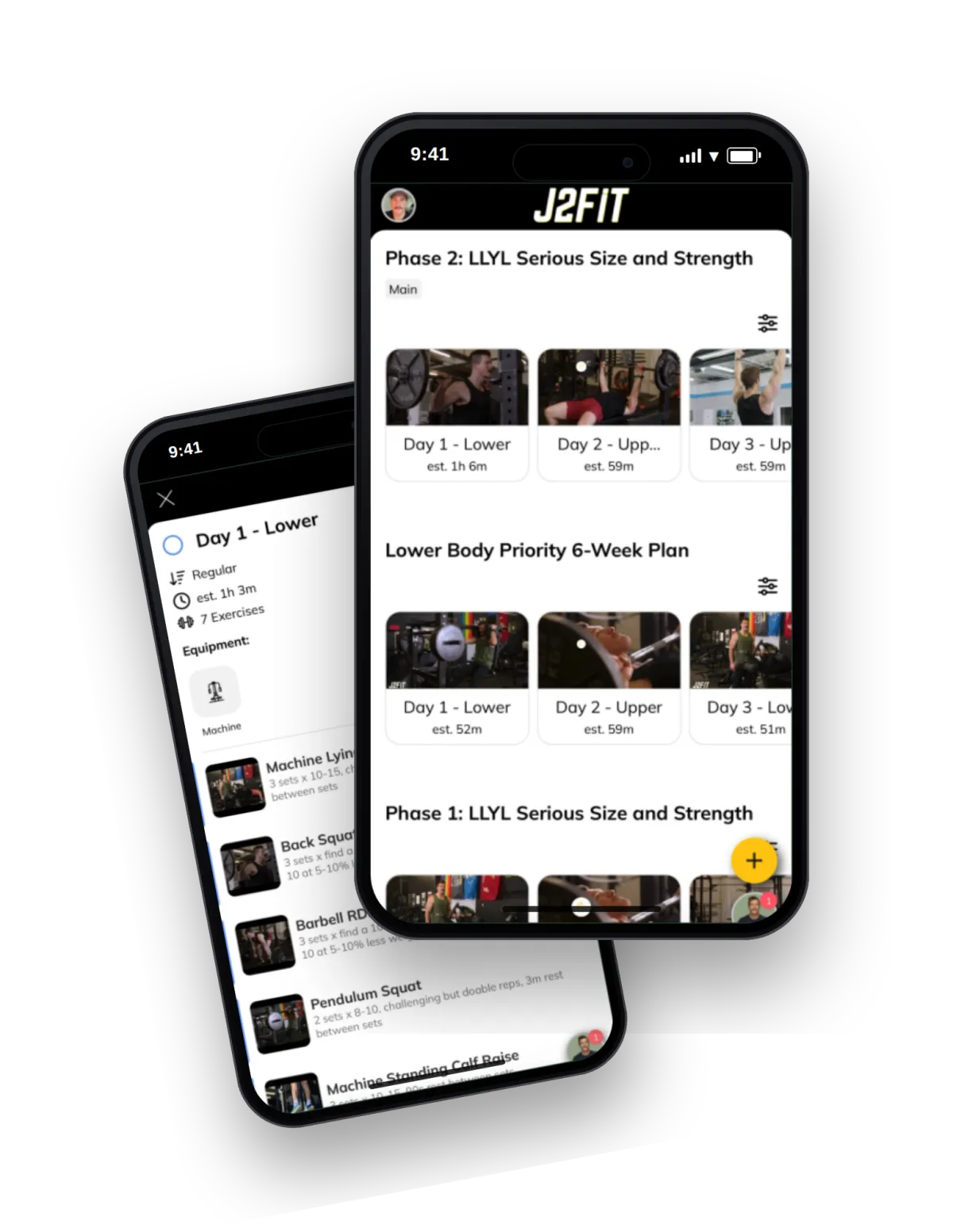
If your specific weak point is the snatch or the clean & jerk, the Snatch Series and Clean & Jerk Series are built to target exactly that. Want programming built around your own weaknesses like this? Check out Olympic lifting programming inside the J2FIT workout app, or schedule a call about coaching if you want a program built specifically around where you're at.
Train It With Structure.
Not Guesswork.
Olympic lifting programming in the app, or a coach building it around you.
— Mike