How to Do Drop Sets (The Right Way)
We finished a recent leg session with a round of drop sets — leg extensions first, then pendulum squats — and by the end of it, my training partner was asking if we could get away with two sets instead of three. (We could not. I was planning on wearing short swim shorts in Maui. The quads had to match.)
Jokes aside, that exchange is a pretty accurate picture of what a drop set is supposed to feel like when you're doing it correctly. If your drop sets don't make you question your life choices a little, you're probably doing them wrong. Here's exactly how to run one.
What a Drop Set Actually Is
A drop set is a way to extend a set past normal failure by immediately reducing the weight and continuing to push the same muscle, usually two or three times in a row. It's an intensity technique, not a volume technique — the goal isn't to accumulate more total sets, it's to squeeze more stimulus out of a muscle that's already fatigued.
That makes it a great finisher for isolation and machine-based movements — leg extensions, pendulum squats, leg curls, that kind of thing — where the fatigue involved doesn't put you at the same injury risk it might on a heavy free-weight compound lift.
Rule #1: Attack the First Segment Like It's a Straight Set to Failure
This is the mistake almost everyone makes: pacing themselves through the first portion of a drop set so they have "enough left" for the drops that follow.
That's backwards, and it defeats the entire purpose. Go into the first segment of a drop set exactly like you would a straight set going to true failure on its own — full effort, no held-back reps. The drops that come after aren't there to make up for a soft first set. They're there to keep pushing a muscle that's already been taken to its limit.
Rule #2: Keep Constant Tension on the Target Muscle
Once you're in it, the job is simple but brutal: keep the tension on the muscle you're targeting for the entire set, drop to drop. No resting at the bottom, no shaking it out between reps if you can help it. The whole point is to keep the muscle under load and working — that's what drives the extra growth stimulus a straight set alone won't give you.
Rule #3: Think in Total Reps, Not Reps Per Drop
Instead of planning a rigid number of reps for each individual drop, it's often more useful to set a total rep target across the whole set. In one recent session, the plan was 40 total reps across three drops on the pendulum squat — going to genuine failure on the first two drops, then doing whatever it took to finish out the last stretch.
That framing matters because a drop set rarely goes according to a clean plan. You might get 15 reps on the first drop, 11 on the second, and grind out the last few one at a time. As long as you're hitting real failure on each segment and adding up toward your total, the set is doing its job.
Rule #4: Finish However You Have To
By the final drop, you're not chasing clean, easy reps anymore — you're chasing the target. That's where things like brief holds at the top, a spot from a training partner, or just gritting out singles one at a time come in. It's not going to be pretty. It's not supposed to be.
Having a training partner call out the countdown or hold you accountable for the agreed-upon total makes a real difference here — it's a lot easier to shortchange a drop set when no one's watching than when someone's standing there saying "we need to do all three."
When to Use Drop Sets
Drop sets are a finisher, not a foundation. Use them at the end of an exercise or a muscle group's session — after your straight working sets are done — not as your primary way of training a movement. One or two well-executed drop sets at the end of a session will do more for you than dragging out five mediocre ones through the middle of your workout.
Stop Guessing.
Follow the Program.
Structured, progressive training built for people who want to look like they lift.
Get the AppTake the 60 Second Quiz
FAQ
How many drop sets should I do per workout?
One or two well-executed drop sets per muscle group, placed at the end of that muscle's training for the day, is plenty. More than that usually just adds fatigue without adding proportional growth.
Are drop sets good for beginners?
Not usually as a starting point. Drop sets ask you to push to genuine failure, which requires knowing what real failure feels like and being able to keep your form together while fatigued. Beginners are generally better off building a base of straight sets first and adding drop sets in once their technique is solid.
Do drop sets build muscle, or just burn you out?
Done correctly — real effort on the first segment, constant tension, a clear rep target — they're an effective way to add growth stimulus beyond what a straight set alone provides. Done as a way to "feel" like you worked hard without real intensity on that first segment, they're mostly just fatigue with little to show for it.
The Bottom Line
A drop set only works if you stop trying to survive it and start trying to attack it. Full effort on the first segment, constant tension through every drop, a total rep target instead of a rigid rep-per-drop plan, and whatever it takes to finish the last stretch — that's the difference between a drop set that actually builds muscle and one that just wastes time.
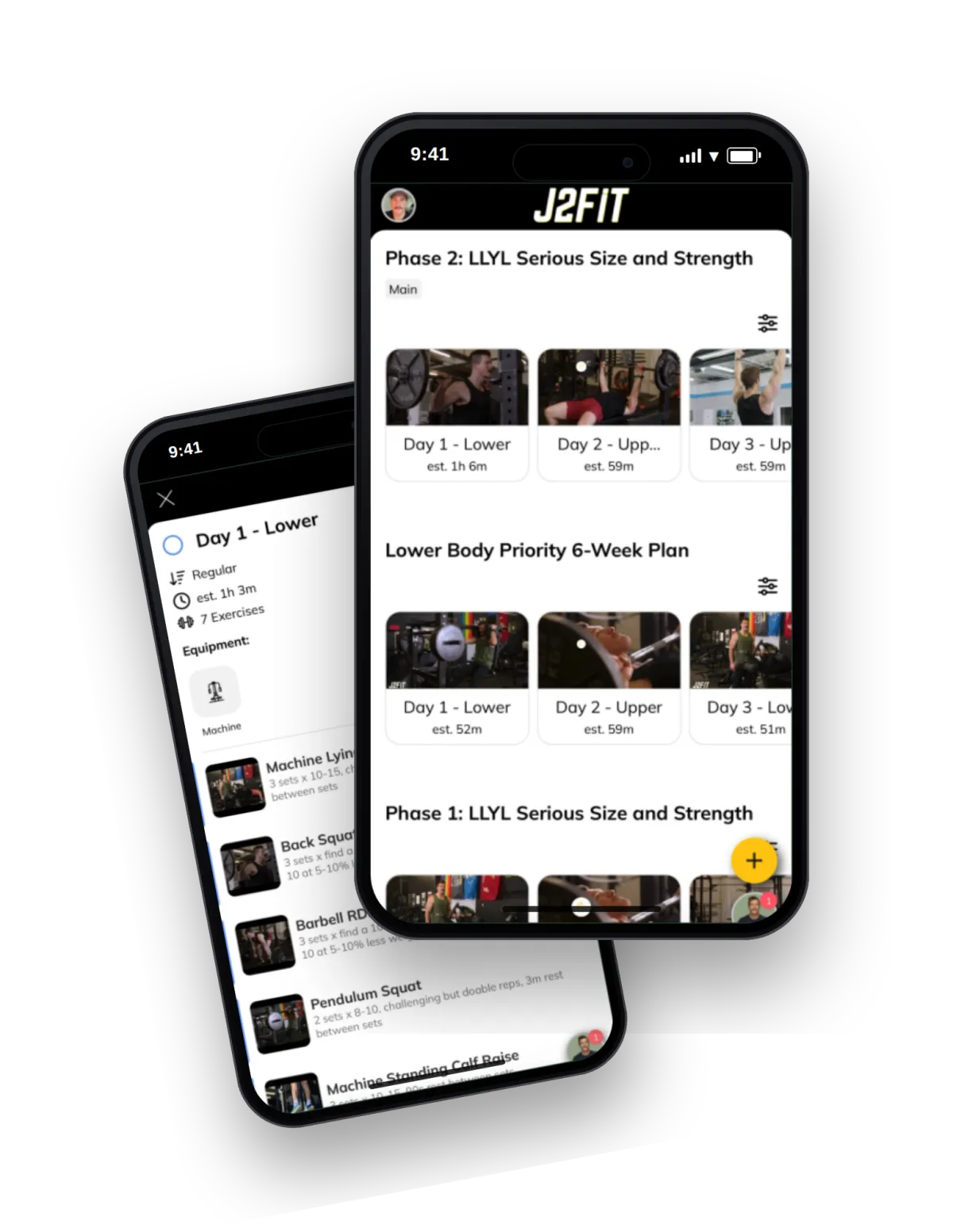
Want this kind of intensity technique built into a real program instead of guessing where to add it? Check out the gym series workout plans (3, 4, and 5-day options), the Priority Series for bodypart-focused plans, or get full programming inside the J2FIT workout app.
— Mike